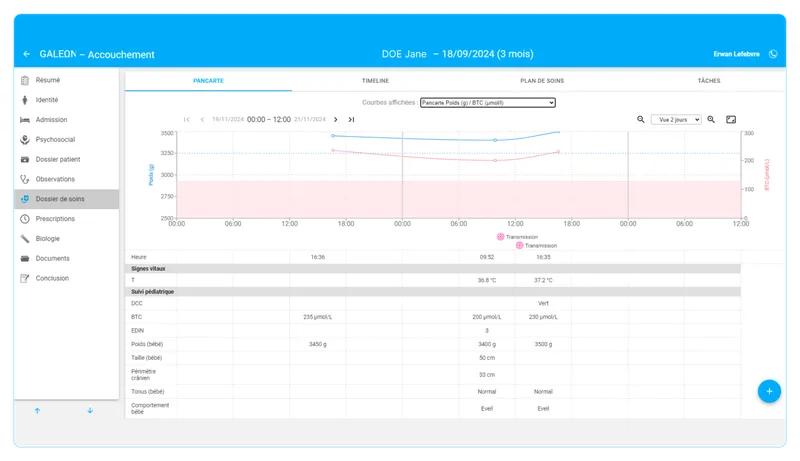
 See Galeon for real
Choosing an EHR in 2026: Should It Adapt to Your Department?
Choosing an EHR in 2026: how far should it adapt to your department, why vendor timelines slip, and how to check a vendor truly listens to clinicians.
The essentials in 30 seconds
| Question | Short answer | Key takeaway |
|---|---|---|
| Should an EHR adapt to the way a department works? | Partly: it must support care practices while enforcing a common structure for the data. | Neither a straitjacket nor endless customisation. |
| Why do clinicians say "we are the ones who have to adapt to the software"? | Because many systems offer no room for adjustment once they are installed. | The ability to adjust is a selection criterion. |
| Are the timelines EHR vendors announce reliable? | Often not: one CIO talks about timelines "before tax", one hospital director says "3 months and it's done, that's not true". | Ask for verifiable references, not promises. |
| Why are vendors slow? | A large share of their roadmaps is regulatory: one vendor puts it at 90%. | Little room is left for requests from the wards. |
| How can you tell whether a vendor really listens? | Ask departments already using it how many of their requests were delivered, and how quickly. | Clinicians who use it are the best reference. |
| Should you customise everything? | No: too much customisation makes the data unusable and complicates every update. | Customise the workflow, standardise the data. |
| What should you check before choosing? | Clinicians on the vendor's team, visits to live sites, a clear improvement process. | Go and see the software where it runs. |
Introduction
Choosing an EHR (electronic health record) means choosing the hospital software every department will work in, every day, for years. "This software isn't built for the way we work." That objection comes up in almost every EHR project. A level 1 maternity unit does not run like a level 3 one, a gynaecology department has its own protocols, and every team has built up habits over the years that exist for good reasons.
The fear runs deeper because many clinicians have lived with rigid tools. A coordinating midwife puts it this way: "I've known software where adjustments just didn't exist. You were in front of a tool and you had to fit into it. We were the ones adapting to the tool."
At Galeon, an EHR built with clinicians since 2016 and deployed in 19 hospitals, this question sits at the heart of our method. This article explains how far an EHR can adapt, why vendor timelines worry hospitals, and how to check that a vendor genuinely listens to the people on the ground.
A good EHR customises the workflow and standardises the data: that is what lets it adapt without becoming unusable.
Should an EHR adapt to the department's practices, or the other way round?
Both, to a degree. The EHR must support the department's care practices, but it must also enforce a common structure for the data, otherwise the data is good for nothing but being read back.
A regional hospital group (GHT) in Brittany learned this when it replaced an EHR used for 17 years and configured doctor by doctor: well liked, but described as "a big typewriter" from which no data could be extracted. It took six months of discussion with the medical staff to impose 80% generic configuration (SantExpo 2026).
The right line runs between workflow and data. The order of screens, letter templates and shortcuts can adapt to the department. A patient's weight, a medical history item or a score, on the other hand, must be recorded in the same place and the same way by everyone. That is what makes sharing between teams, statistics and, tomorrow, AI in healthcare possible.
Why do clinicians feel they have to adapt to the software?
Because in many systems nothing changes after go-live. Requests from the wards join a distant roadmap, and the department ends up working around the tool.
There is a structural cause. At a round table of the Fédération hospitalière de France (the French hospital federation), a vendor executive acknowledged that "90% of roadmaps are regulatory", leaving little room for the features clinicians ask for (FHF, SantExpo). The same speaker explained that the French Ségur digital health programme was funded when vendor roadmaps were already "200% full".
For a department, this translates into a simple feeling: the tool was designed somewhere else, for someone else, and it will not change. A midwife with 38 years in the job says it bluntly: "when it's only technocrats", there are no clinicians to explain how things should be done.
Are EHR vendor timelines for an EHR migration reliable?
Often not, and hospitals now say so in public. The prudent approach is to check timelines with existing customers rather than rely on a sales pitch.
At SantExpo 2024, the CEO of a hospital summed up his experience: vendors "come and tell us: don't worry, 3 months and it's done. That's not true" (SantExpo 2024). Two years later, the CIO of a GHT in Brittany, standing next to his own vendor, spoke of timelines "before tax": when 3 months is announced, count on 6 months to a year (SantExpo 2026).
These accounts do not target any particular vendor: they describe a market where regulatory constraints absorb most of the development capacity. They are an invitation to ask precise questions before choosing.
Choosing an EHR: how do you know whether the vendor really listens to the wards?
By asking the clinicians who already use it. How many of their requests were delivered, how quickly, and how were they raised?
In departments running Galeon, clinicians describe a concrete way of working. A midwife with 38 years of experience recalls that at the morning staff meeting the team flagged a problem, and a member of the Galeon team replied "that, I can change". A maternity department head notes that "the software isn't set in stone", with a list of improvements worked through step by step after installation. A paediatric nursing assistant explains that the items missing at the start were "added little by little".
The CIO of a Paris maternity hospital, who left a "much bigger" vendor, highlights the difference in the relationship: a vendor "listening to the problems we had, to the development we wanted". Having clinicians on the vendor's team matters too: several teams point out that Galeon employs healthcare professionals.
Go and see the software where it runs
A head of obstetrics and gynaecology explains that he visited two maternity units already using the software before making up his mind: "it's worth going to test it somewhere else". Having worked as a locum in some twenty facilities, he adds that with some systems he "still hasn't understood how it works". A site visit tells you more than a sales demo.
Should maternity software be different from a general EHR?
Often, yes. A maternity unit has needs that few general hospital systems cover well: nine months of pregnancy follow-up, the partogram, an obstetric record shared between community care and the hospital, and the newborn's record.
An obstetrician pointed this out as early as 2018: his hospital's general EHR "adapts to every specialty" but is "not specific enough to each medical specialty", especially for the consultation before admission. That is where Galeon began, in maternity care, before expanding to the whole hospital. The right criterion is not "general or specialised", but whether the tool covers the department's real care pathway without forcing staff to juggle several systems.
How far should you customise an EHR?
Just enough for the department to work well, not so far that every record becomes unique. Excessive customisation complicates updates and prevents the data from being used.
Hospitals that have gone through switching EHR say it clearly: what clinicians miss is rarely a feature, it is the customisation built up over years. One GHT had the courage to announce this "regression" officially before go-live (SantExpo 2025). The challenge is therefore to rebuild most of the day-to-day comfort while keeping common data. We go through the selection criteria in our article on the real cost of an EHR.
Rigid EHR or an EHR that evolves with the wards: what are the differences?
| Criterion | Rigid EHR | Galeon approach |
|---|---|---|
| Design | Designed by the vendor, validated afterwards | Built with clinical teams since 2016 |
| Raising requests | A ticket into a distant roadmap | Requests raised at staff meetings and followed up with the department |
| Adjustments after go-live | Rare or billed separately | Gradual adjustments after go-live |
| Templates and letters | Imposed standard | Adapted to the department's protocols |
| Data structure | Often free text, varying by department | Common, so data can be shared and used |
| Clinicians at the vendor | Varies | Healthcare professionals on the team |
| Updates | Heavy on-site installations | Online software that evolves without reinstallation |
| Relationship | Commercial and contractual | Regular follow-up with the department's lead users |
Limits and points of caution
- Not everything can be adapted immediately. Clinicians say so themselves: "when things get better, you always want more", and some requests take time.
- Regulatory constraints apply to every vendor, Galeon included: part of the development capacity is reserved for them.
- A large facility weighs differently. The needs of a university hospital or an entire hospital call for more trade-offs than a maternity unit.
- Too much customisation harms the data. Accepting every request would mean rebuilding a "typewriter".
- Interfaces with the hospital's information system sometimes limit what an EHR can do, however flexible it is.
FAQ
Can an EHR be adapted to a department's protocols?
Yes for templates, letters and screen layout. The data structure, however, must stay common so it can be shared and used.
How long does it take to get a requested adjustment?
It depends on the request and the vendor. The best indicator is the experience of departments already using the software.
Why do EHR vendors take so long to deliver?
Because a large share of their capacity goes to regulatory obligations, such as the French Ségur digital health programme or interoperability with the DMP (the French shared medical record).
How do you choose an EHR for your hospital?
Visit live sites, talk to clinicians who use it, and ask how requests are raised and followed up.
Which software for a maternity unit or hospital midwives?
Software that covers the whole pathway: pregnancy follow-up, obstetric record, delivery room, postnatal care and the newborn, shared with community professionals.
Should you carry over every template from the old EHR?
No: list them, keep the ones used every day, and use the change to simplify some of them.
What is an EHR "built with clinicians"?
Software whose screens and pathways are designed and adjusted with healthcare professionals, not validated after the fact.
In summary
The objection "this software isn't built for the way we work" comes from years of rigid tools, where clinicians had to adapt to the software. It is reinforced by a market where regulation fills most roadmaps and announced timelines are not met. The right answer is not endless customisation, which makes the data unusable, but a balance: customise the workflow, standardise the data, and adjust the tool as feedback comes in from the department. To check that a vendor keeps this commitment, nothing beats the word of the clinicians who use it. That is the principle that has guided Galeon since 2016.
Want to know more about our smart EHR ?
Book a demoRead also: hospital interoperability in 2026
Sources
- FHF, SantExpo: "Made in France" digital health (regulatory share of vendor roadmaps)
- SantExpo 2024: lessons learned from an EHR change
- SantExpo 2026: day-to-day realities of an EHR deployed at GHBA
- SantExpo 2025: big bang EHR deployment in a GHT
- Ségur digital health programme, French Digital Health Agency (ANS)
- Galeon: Ségur digital health programme, wave 2
- Galeon: feeding and consulting the DMP from the EHR
They trust us
19 hospitals running Galeon in France.
















Join the pioneers of care.
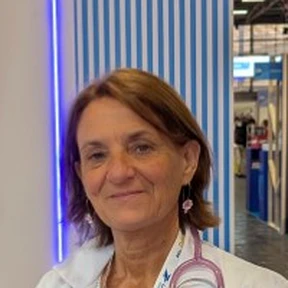
 2 sales reps available from tomorrow
Next step
Your IT, your interfaces, your timeline. Pick a slot: Valérie or Yohan will call you back.
- HDS certified
- ISO 27001
- GDPR compliant
- LAP certified (HAS)