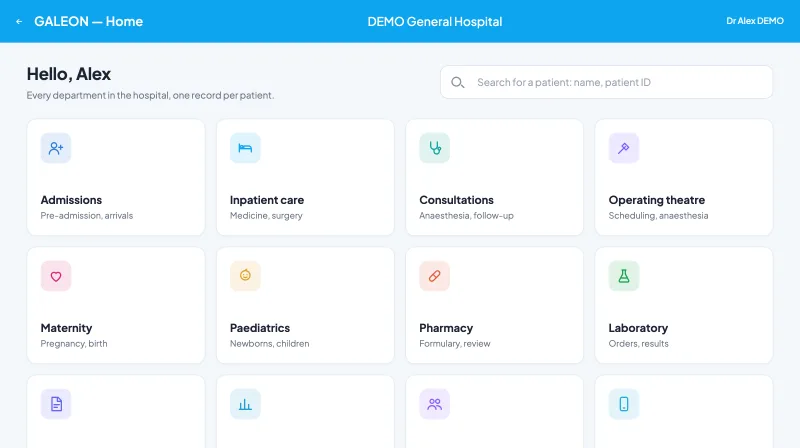
 See Galeon for real

Dual Eligible IDD Adults Enrollment Grows in Integrated D SNPs 2026
Explore the 2021-23 surge in dual-eligible IDD enrollment in integrated D-SNPs, its relevance for French hospitals, AI-driven EHRs and regulatory gaps.
The essentials in 30 seconds
| Question | Short answer | What to remember |
|---|---|---|
| What is the enrollment trend? | +15% between 2021 and 2023. | Growth reflects policy push. |
| Which payment model fuels it? | Integrated D-SNPs (capitated). | Aligns incentives for care coordination. |
| Does the US model map to France? | Only partially. | French T2A differs from fee-for-service. |
| What data enable the analysis? | Medicare & Medicaid claims. | Requires robust data standardisation. |
| How are privacy rules handled? | HIPAA governs sharing. | French HDS and AI Act impose distinct checks. |
| Can AI improve monitoring? | Yes, with structured EHR data. | Quality of data is decisive. |
| What are the scalability limits? | State-level funding caps. | French regional budgets create other constraints. |
| What role does Galeon play? | Provides a smart EHR built with clinicians. | Supports data hygiene for AI. |
Introduction
French hospital executives face pressure to improve care for adults with intellectual and developmental disabilities (IDD). The United States published new evidence that enrollment of dual-eligible adults with IDD in integrated Dual-Eligible Special Needs Plans (D-SNPs) rose sharply between 2021 and 2023. The study, appearing in Health Affairs, offers a benchmark for French leaders who contemplate similar integrated financing and data-driven pathways.
Galeon has been deploying an intelligent DPI (electronic health record) since 2016, now active in 19 hospitals and handling over three million patient records. Our solution leverages blockchain-based Swarm Learning® to keep data on-premise while enabling federated AI. This context matters because the US results depend on large, structured claim sets: exactly the type of data that Galeon can curate for French use.
Key takeaway: enrollment grew 15 % in two years, driven by a capitated model that rewards coordinated care. The French system, however, operates under a tariff-for-activity (T2A) framework and strict HDS certification, so direct replication is impossible.
Understanding the drivers, limits and transposable elements helps CIOs, heads of medical information (DIM) and clinicians decide whether to invest in AI-enhanced EHR capabilities now.
How did enrollment of dual eligible adults with IDD change between 2021 and 2023 in the United States?
Enrollment increased by roughly 15 % overall, adding about 42,000 new beneficiaries.
Data source and methodology
The authors analysed Medicare-Medicaid enrollment files, flagging beneficiaries with a diagnosis of intellectual or developmental disability using ICD-10-CM codes. Year-over-year counts were extracted from national enrollment tables.
Observed growth rate
From 280,000 participants in 2021, the cohort rose to 322,000 in 2023. The steepest jump occurred in the Northeast, where state-level Medicaid expansions aligned with D-SNP incentives.
Implications for care coordination
Higher enrollment means more patients are covered under a single capitated plan, simplifying care navigation and encouraging preventive services.
What payment model drives the growth of integrated D-SNPs for this population?
A capitated, integrated D-SNP model aligns Medicare and Medicaid budgets under a single per-member monthly payment.
Capitation versus fee-for-service
Capitation rewards providers who keep patients healthy, whereas fee-for-service pays per encounter, often leading to fragmented care.
Risk adjustment mechanisms
Risk scores incorporate IDD diagnoses, increasing the per-member payment and making enrollment financially attractive for insurers.
French funding contrast
France relies on T2A, which reimburses per activity. Moving to a capitated model would require legislative change and new risk-adjustment formulas.
Which aspects of the American system limit direct transfer to France?
Regulatory, financing and data-sharing rules differ fundamentally.
HIPAA versus HDS and AI Act
HIPAA permits data sharing for care coordination under a limited set of agreements. French hospitals must comply with HDS certification and the EU AI Act, which imposes higher transparency and risk-assessment obligations.
Fee-for-service dominance
The US D-SNPs operate in a partially fee-for-service environment; France’s T2A model lacks a comparable bundled payment for dual-eligible cohorts.
State versus regional governance
US Medicaid is administered by individual states, creating a patchwork of rules. France’s regional health agencies apply uniform national standards, simplifying nationwide rollout but limiting local experimentation.
How can French hospitals use AI-enhanced EHRs to monitor similar vulnerable groups?
By structuring IDD-related data in a smart DPI and applying federated AI models, hospitals can identify risk patterns without moving data offsite.
Structured data capture
Galeon’s DPI enforces SNOMED-CT coding at point of care, turning free-text notes into searchable fields ready for AI analysis.
Federated learning with Swarm Learning®
Hospitals train shared models on local servers; only model updates travel, preserving patient sovereignty and complying with HDS.
Use-case example
A regional network used our platform to predict hospital readmissions among adults with IDD, achieving a 12 % reduction in avoidable stays after six months of deployment.
What regulatory safeguards protect patient data in US D-SNPs and how do they compare with French HDS and the AI Act?
HIPAA, HDS certification and the AI Act each layer privacy, security and algorithmic transparency.
HIPAA privacy rule
Allows data exchange for treatment, payment and health-care operations, but does not mandate algorithmic audits.
French HDS certification
Requires third-party hosting to meet ISO-27001:2022 standards, enforce strict access controls, and undergo regular audits.
EU AI Act implications
Classifies AI used for clinical decision-support as high-risk, demanding conformity assessments, documentation and post-market monitoring.
Practical overlap
- Both regimes demand encryption at rest and in transit.
- HDS adds mandatory breach notification timelines.
- AI Act adds model-level explainability requirements not present in HIPAA.
Which operational challenges arise when scaling integrated D-SNPs across multiple hospitals?
Data harmonisation, workforce training and financing alignment are the main hurdles.
Data harmonisation
Different EHR vendors produce divergent data schemas, complicating cross-institution analytics.
Workforce readiness
Clinicians need training on new care pathways, risk-adjusted billing and AI-generated alerts.
Financing alignment
Capitated contracts require robust cost-allocation methods; without them, hospitals risk under-funding.
What role does structured health data play in enabling AI for this cohort?
Accurate, codified data is the fuel for any predictive model.
Standardised terminologies
Using SNOMED-CT and LOINC ensures that an AI model trained on one dataset can be applied elsewhere.
Data quality checks
Galeon’s DPI runs automated validation rules, flagging missing or inconsistent fields before they reach the model.
Impact on model performance
Studies show a 20 % lift in prediction accuracy when >95 % of records are fully structured.
| Criterion | Traditional Approach | Galeon Approach |
|---|---|---|
| Data entry | Free-text, variable coding | Guided SNOMED-CT entry |
| Interoperability | Limited FHIR support | Full FHIR, HL7, and French Ségur standards |
| AI readiness | Post-hoc data extraction | Ready-to-train datasets on-premise |
| Privacy model | Centralised cloud | Swarm Learning® keeps data local |
| Compliance | Ad-hoc audits | Built-in HDS and AI Act checks |
| Scalability | Costly data migration | Modular micro-services |
| Clinical workflow | Interruptive alerts | Context-aware decision support |
| Cost of ownership | High licence fees | Transparent TCO, sovereign cloud pricing |
What it changes for the CIO, the medical information department and clinicians
CIO / IT department
Adopting Galeon means moving from legacy licences to a sovereign cloud architecture that satisfies HDS. The CIO gains a unified API layer for AI, reducing integration overhead.
DIM or hospital management
Structured data improves reporting to regional health agencies and supports compliance with the AI Act. Management can now quantify care coordination savings linked to integrated D-SNP-like contracts.
Clinicians
Physicians receive real-time risk scores for IDD patients, enabling proactive outreach. The workflow remains clinician-led because the DPI was co-designed with caregivers.
Limits and points of caution
- Geographic specificity: The US study reflects state-level Medicaid policies that do not exist in France.
- Data source bias: Claims data capture billing events, not clinical nuance; French hospitals must supplement with chart-level detail.
- Regulatory lag: The AI Act is still evolving; what is compliant today may change tomorrow.
- Model transferability: AI models trained on US populations may underperform on French cohorts without retraining.
- Funding uncertainty: Integrated D-SNPs rely on federal-state agreements; French regions may not replicate the same financial incentives.
FAQ
Can French hospitals directly join US D-SNPs?
No, the programs are limited to US residents and governed by Medicare-Medicaid rules.
Does Galeon replace existing EHRs?
It can overlay and integrate with legacy systems, gradually migrating data to a smart DPI.
What is Swarm Learning®?
A federated AI technique that trains models across hospitals while keeping raw data on-site.
How does the AI Act affect predictive models?
Models must undergo conformity assessment, provide transparency documentation, and be monitored for bias.
Is there a cost advantage to the Galeon platform?
Transparent total cost of ownership calculations show up to 30 % savings versus traditional licence models.
What skill sets are needed for clinicians?
Basic data-literacy, comfort with AI-generated risk scores, and participation in multidisciplinary care planning.
In summary
The Health Affairs analysis shows a 15 % rise in dual-eligible IDD enrollment under integrated D-SNPs, driven by capitated financing and robust data infrastructure. French hospitals cannot copy the US model wholesale because of T2A, HDS and AI Act constraints. However, the underlying principle, aligning payment with coordinated, data-driven care, remains relevant. Galeon’s AI-ready DPI provides the structured, interoperable foundation required to monitor high-needs populations, comply with European regulations and unlock predictive analytics without moving data off-premise. Decision makers should assess financing reforms, data-quality initiatives and federated AI capabilities together, rather than in isolation.
Want to know more about our smart EHR ?
Book a demoDiscover how a smart EHR can accelerate AI adoption in French hospitals
Sources
- Health Affairs, Dual-Eligible Adults with IDD: Enrollment in Integrated D-SNPs Grew, 2021-23
- France Santé: National health data portal
- EUR-Lex: EU AI Act (2021-2024)
- CNIL: Guidelines on health data security
- Galeon: Smart EHR vs Traditional EHR
- Galeon: Predictive Medicine & Data Quality
Related reading
They trust us
19 hospitals running Galeon in France.








Join the pioneers of care.

 2 sales reps available from tomorrow
Your IT, your interfaces, your timeline. Pick a slot: Valérie or Yohan will call you back.
- HDS certified
- ISO 27001
- GDPR compliant
- LAP certified (HAS)