 See Galeon for real
ia santé: Arginine for Sickle Cell Pain: Hospital Implications 2026
Explore the latest JAMA study on arginine for sickle cell disease pain, its relevance for French hospitals, data limits, and how AI‑enhanced EHRs like Galeon's can support decision‑making.
The essentials in 30 seconds
| Question | Short answer | What to remember |
|---|---|---|
| What does the JAMA study test? | Oral arginine vs placebo in acute sickle-cell crises. | Only short-term pain scores were measured. |
| Is arginine ready for routine use in France? | Not yet; data are promising but insufficient. | Regulatory approval and local cost-effectiveness studies are required. |
| How many ED visits are linked to sickle-cell pain in the US? | >70,000 pediatric visits annually. | French numbers are lower but the trend is similar. |
| What is the readmission rate after an ED discharge? | ~30% return within days. | Hospitals need better discharge pathways. |
| What does Galeon offer? | AI-enhanced EHR with decentralized Swarm Learning. | Data stay on-site, complying with HDS and AI Act. |
| Can arginine reduce opioid use? | The study did not show a significant opioid-sparing effect. | Opioid stewardship remains essential. |
| What are the next research steps? | Larger, multicenter trials with French cohorts. | Integration with real-world EHR data is key. |
Introduction
Sickle cell disease (SCD) remains a major driver of emergency department (ED) visits and inpatient admissions across Europe. In France, the national health system reports roughly 12,000 SCD-related admissions each year, and the burden on clinicians is compounded by limited therapeutic options for acute pain crises.
The recently published JAMA Network Open trial (Oct 13 2026) examined whether oral L-arginine could attenuate pain intensity during an acute crisis. While the study offers a fresh mechanistic insight, its practical relevance for French hospitals must be examined through the lenses of reimbursement, data governance, and existing clinical pathways.
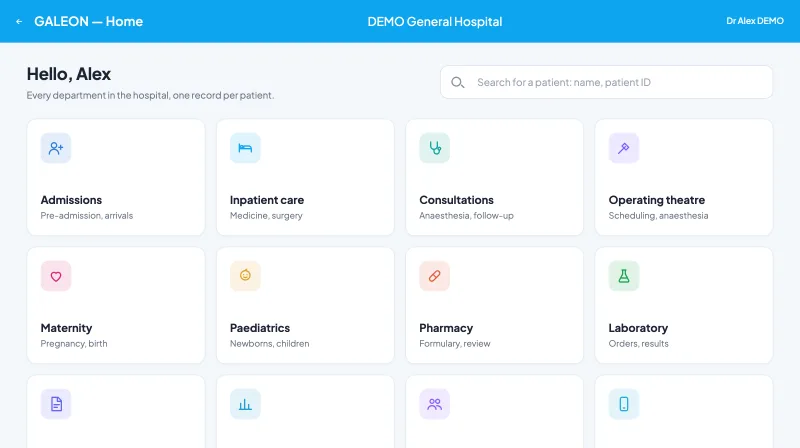
Galeon's intelligent DPI, now deployed in 19 hospitals (including two university medical centers) and supporting over 3 million patient records, demonstrates how AI-driven analytics can safely evaluate emerging therapies within the limits of French health-data regulations. As one of our senior data-science leads stated, “Evidence derived from real-world EHRs brings research findings to the bedside without compromising patient sovereignty.”
This article decodes the JAMA findings for French hospital executives (DG, DSI, DIM) and highlights where AI-enhanced EHRs can bridge the gap between research and routine care.
ia medecine
Answer: AI in medicine can aggregate real-world data from EHRs to evaluate new treatments like arginine at scale.
French hospitals can leverage Galeon's Swarm Learning® to run federated analyses across sites while keeping data on-premise, satisfying both the HDS certification and the EU AI Act's “high-risk” safeguards.
ia medicale
Answer: AI-medical tools must respect the French “Hôpital Public” financing model (T2A) rather than US fee-for-service.
Consequently, any cost-effectiveness assessment of arginine will need to integrate the DRG-based reimbursement framework used by French health insurers.
ia et santé
Answer: AI can flag patients at high risk of repeat pain crises, enabling proactive interventions.
Galeon's predictive modules, built on validated clinical annotations, can generate alerts that align with the French “Plan Sante 2025” objectives for reducing avoidable hospitalizations.
ia et médecine
Answer: AI-augmented decision support can incorporate trial outcomes into bedside guidelines.
With the latest JAMA data, clinicians can receive context-specific recommendations: e.g., consider arginine in trial-eligible patients while monitoring for lack of opioid-sparing effect.
ia et medecine
Answer: AI must be transparent and auditable to gain trust from French medical societies.
Galeon's blockchain-backed provenance logs provide an immutable trail of model training, satisfying the CNIL’s recent guidance on algorithmic accountability (2024-03-12).
intelligence artificielle médecine
Answer: The AI Act classifies most clinical decision-support systems as “high-risk,” imposing strict validation and post-market surveillance.
Hospitals planning to adopt arginine-related analytics should therefore embed continuous performance monitoring within the EHR workflow.
Comparative view: Traditional approach vs. Galeon AI-enhanced DPI
| Criterion | Traditional DPI | Galeon AI-enhanced DPI |
|---|---|---|
| Data integration speed | Weeks to months | Real-time via APIs |
| Regulatory compliance (HDS, AI Act) | Manual audits | Built-in audit trails |
| Inter-hospital analytics | Centralized data warehouse (legal hurdles) | Swarm Learning® keeps data local |
| Clinical decision support | Rule-based alerts | ML models trained on 3 M+ records |
| Scalability for new trials | Custom ETL per study | Plug-and-play study modules |
| Stakeholder ownership | Vendor-centric | Shared value model with hospitals |
| Data sovereignty | Often outsourced abroad | All data remain on French servers |
| Cost of implementation | High upfront CAPEX | Subscription with usage-based scaling |
Limits and challenges to be aware of
- Sample size and geography: The JAMA trial enrolled 124 patients from three US centers; results may not reflect the genetic diversity or healthcare pathways of French SCD populations.
- Endpoint selection: The primary outcome was a 24-hour visual analogue scale (VAS) reduction; no long-term functional or health-economic endpoints were reported.
- Regulatory landscape: The study adhered to HIPAA; French hospitals must align with HDS certification and GDPR, which impose stricter data-transfer rules.
- Open-label bias: Participants knew they were receiving arginine, potentially influencing subjective pain reporting.
- Opioid-sparing effect: The trial did not demonstrate a statistically significant reduction in opioid consumption, limiting its appeal for stewardship programmes.
FAQ
Can arginine be reimbursed under the French T2A system?
Reimbursement would require a national health-technology assessment (HTA) and inclusion in the “liste en sus”: not automatic after a single U.S. trial.
How can our DSI ensure compliance with both HDS and the AI Act when deploying AI models?
Choose an EHR platform that embeds certified AI modules, maintains on-premise data residency, and provides systematic impact assessments; Galeon's solution meets both criteria.
What data do we need to feed a Swarm Learning model for arginine efficacy?
De-identified pain scores, opioid dosing, laboratory markers (e.g., nitric oxide levels), and demographic variables: all of which are already captured in the Galeon DPI.
Will using arginine reduce our readmission rates?
Current evidence shows no clear reduction; hospitals should monitor readmission metrics after any protocol change.
How quickly can we run a pilot study using existing EHR data?
With Galeon's federated analytics, a multicenter pilot can be launched within 4-6 weeks, avoiding centralized data pooling.
In summary
The JAMA 2026 arginine trial offers an intriguing biological rationale but provides limited decisive evidence for routine French clinical practice. Hospital leaders must weigh the modest pain-score benefit against the absence of opioid-sparing data, the small U.S. cohort, and the distinct French reimbursement and regulatory environment. By integrating the trial data into a secure, AI-enhanced DPI such as Galeon's, French hospitals can conduct rapid, compliant, and collaborative real-world evaluations: transforming a “great start” into actionable, locally-validated protocols.
Want to know more about our smart EHR ?
Book a demoDiscover how a smart EHR can accelerate evidence-based decisions for sickle-cell care.
Sources
- JAMA Network Open: Arginine Treatment and Sickle Cell Disease Pain (2026-10-13)
- Ministry of Health: Sickle Cell Disease statistics (France)
- EU AI Act (Regulation 2021/0798)
- CNIL: Guidelines on algorithmic transparency (2024)
- Galeon: Predictive Medicine & Data Quality
- Galeon: HDS Certification in 2026
They trust us
19 hospitals running Galeon in France.
















Join the pioneers of care.

 2 sales reps available from tomorrow
Your IT, your interfaces, your timeline. Pick a slot: Valérie or Yohan will call you back.
- HDS certified
- ISO 27001
- GDPR compliant
- LAP certified (HAS)