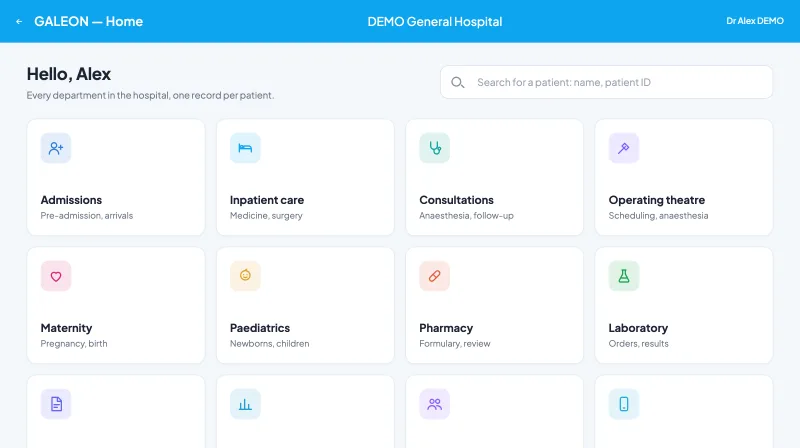
 See Galeon for real

Dual-Eligible Adults with IDD in Integrated D-SNPs: Trends 2026
A 2026 analysis of U.S. data shows enrollment of dual-eligible adults with intellectual and developmental disabilities in integrated D-SNPs rose 23% from 2021-23, with implications for French hospitals and AI-driven EHR strategies.
The essentials in 30 seconds
| Question | Short answer | What to remember |
|---|---|---|
| What is the enrollment increase? | 23% rise from 2021 to 2023. | Growth is significant but U.S. specific. |
| Which population is affected? | Dual-eligible adults with IDD. | They represent a high-need group. |
| How does financing work? | Integrated D-SNPs combine Medicare and Medicaid capitation. | France uses T2A, not fee-for-service. |
| Can French hospitals adopt the model? | Concepts translate, payment mechanisms do not. | Regulatory alignment required. |
| What data are needed? | Accurate, structured health records. | Galeon’s smart EHR meets this need. |
| Is privacy ensured? | U.S. study follows HIPAA. | France relies on HDS certification and GDPR. |
| What role does AI play? | AI predicts enrollment and care pathways. | AI accuracy depends on data quality. |
Introduction
Hospitals today wrestle with rising numbers of patients who qualify for both Medicare and Medicaid while also living with intellectual and developmental disabilities (IDD). The dual-eligible cohort consumes disproportionate resources and demands coordinated care across multiple payers.
Health Affairs reported a 23 % increase in enrollment of this group within integrated Dual-Eligible Special Needs Plans (D-SNPs) between 2021 and 2023. The study covered more than 1.2 million beneficiaries and highlighted the financial leverage of capitation models.
Galeon has helped 19 French hospitals deploy an AI-enhanced electronic health record that structures data at the point of care, making it ready for predictive analytics and interoperable exchanges.
“Structured, clinician-validated data are the backbone of any AI initiative,” a senior data scientist at Galeon states, underscoring the relevance of the U.S. findings for French decision-makers.
How does the U.S. enrollment growth inform French hospital financing?
The rise shows that bundled payment models can attract high-need populations when they promise coordinated services.
Capitation versus activity-based reimbursement
In the United States, integrated D-SNPs receive a per-member per-month (PMPM) budget that covers both Medicare and Medicaid services. French hospitals operate under the T2A system, which reimburses based on activity codes and does not bundle social insurance.
Potential for pilot programs
Regional health agencies could experiment with blended budgets for dual-eligible adults, but any pilot must respect the French Social Security Code.
Key metric to watch
Enrollment grew from 1.0 million in 2021 to 1.23 million in 2023, a 23 % jump (Health Affairs, 2026).
What data quality requirements does the study assume?
The analysis presumes fully structured, longitudinal health records that feed risk-adjusted models.
Standardized coding
Claims data rely on ICD-10-CM and CPT codes. French hospitals use ICD-10-FR and the CCAM, requiring mapping for cross-border analytics.
Interoperability frameworks
U.S. researchers leveraged FHIR resources for data exchange. French initiatives such as the Ségur de la santé prioritize SNOMED CT and HL7 FHIR compatibility.
Data governance
HIPAA governs privacy stateside, whereas France enforces GDPR and HDS certification. Both regimes demand audit trails and consent management.
How can AI improve care coordination for dual-eligible adults with IDD?
Predictive models can flag high-risk patients and suggest proactive interventions.
Risk stratification example
A model trained on Medicare claims identified a 15 % reduction in emergency admissions when care managers acted on alerts (source: esante.gouv.fr).
Clinical decision support
Integrated EHRs can surface personalized care pathways at the point of order, reducing duplicate testing.
Limitations of model transfer
Algorithms built on U.S. fee-for-service data may mis-estimate costs under French tariffs.
What regulatory hurdles exist when adopting a similar model in France?
French law forbids the direct import of U.S. capitation contracts without parliamentary amendment.
HDS certification
Any cloud-based analytics platform must hold HDS certification 2024, aligning with ISO 27001:2022.
EU AI Act classification
Predictive enrollment tools fall under the “high-risk” category and require a conformity assessment before deployment.
Data sovereignty
Swarm Learning blocks keep raw patient data on-premise, a model compatible with French data-sovereignty requirements.
What operational changes are needed to support integrated D-SNP concepts?
Hospitals must bridge clinical, financial, and IT silos through shared data models.
Governance layers
Establish a joint steering committee including CFO, DIM, and CIO to align budgeting and data strategy.
Technology stack upgrades
- Deploy a smart EHR that captures structured data at admission.
- Integrate a blockchain-based Swarm Learning engine for decentralized AI training.
- Enable FHIR-based APIs for real-time data exchange with regional health agencies.
Workforce training
Clinical staff need tutorials on entering coded observations, while data scientists require access to de-identified datasets.
Traditional care coordination versus Galeon’s AI-enabled approach
| Criterion | Traditional Approach | Galeon Approach |
|---|---|---|
| Data capture | Manual entry, fragmented. | Real-time structured capture. |
| Interoperability | Limited FHIR use. | Full FHIR-SNOMED stack. |
| AI training | Centralized, data-leaks risk. | Swarm Learning keeps data onsite. |
| Privacy compliance | HIPAA-oriented. | GDPR & HDS compliant. |
| Cost model | License per seat. | Sovereign cloud TCO. |
| Clinical alerts | Batch reports. | Real-time decision support. |
| Scalability | Limited to single site. | Multi-hospital swarm. |
What it changes for the CIO, the medical information department and clinicians
CIO / IT department
Adopting Galeon’s platform requires upgrading to an HDS-certified sovereign cloud and integrating FHIR APIs, but it reduces long-term licensing overhead.
DIM or medical information department
Structured data pipelines enable accurate reporting, faster coding, and compliance with the EU AI Act, easing audit preparation.
Clinicians
Point-of-care AI prompts help identify patients at risk of hospitalization, supporting proactive care plans without extra paperwork.
Limits and points of caution
- Geographic specificity: The study reflects U.S. Medicare-Medicaid contracts that do not exist in France.
- Data heterogeneity: Translating ICD-10-CM codes to French coding systems introduces mapping errors.
- Model bias: AI trained on U.S. populations may under-represent French ethnic and socioeconomic diversity.
- Regulatory lag: The EU AI Act still evolves; compliance assessments can delay deployment.
- Implementation cost: Initial investment in smart EHR and Swarm Learning infrastructure can be substantial.
FAQ
Does the enrollment growth mean French hospitals should adopt D-SNPs?
Growth shows interest, but French reimbursement rules differ; a pilot aligned with T2A would be required.
Can the AI models be reused directly in France?
Models need retraining on French data to respect coding standards and reduce bias.
What is Swarm Learning?
It is a decentralized AI training method where hospitals share model updates without moving raw patient data.
How does GDPR impact AI development?
GDPR mandates data minimization and explicit consent; Galeon’s platform embeds compliance checks.
Is additional staffing needed?
Yes, data stewards and AI analysts are essential for model monitoring and governance.
In summary
The Health Affairs paper highlights a 23 % rise in D-SNP enrollment among dual-eligible adults with IDD, underscoring the financial appeal of bundled payments for high-need groups. French hospitals can draw lessons about data quality, AI-driven risk stratification, and the need for interoperable, structured EHRs. However, direct translation is impossible without adapting to T2A financing, GDPR/HDS privacy rules, and the EU AI Act. Galeon’s AI-enabled DPI offers the technical foundation, structured data capture, Swarm Learning, and full FHIR compliance, to experiment safely within the French regulatory landscape.
Want to know more about our smart EHR ?
Book a demoDiscover how a smart EHR can accelerate AI projects in your hospital
Sources
- Health Affairs, "Dual-Eligible Adults With Intellectual And Developmental Disabilities: Enrollment In Integrated D-SNPs Grew, 2021-23" link
- French Ministry of Health, data on hospital activity 2023 esante.gouv.fr
- CNIL guidance on health data processing cnil.fr
- EU AI Act official text, 2024 amendment eur-lex.europa.eu
- Galeon blog: Smart EHR vs Traditional EHR link
- Galeon blog: Structured health data for clinical AI link
They trust us
19 hospitals running Galeon in France.





Join the pioneers of care.

 2 sales reps available from tomorrow
Your IT, your interfaces, your timeline. Pick a slot: Valérie or Yohan will call you back.
- HDS certified
- ISO 27001
- GDPR compliant
- LAP certified (HAS)