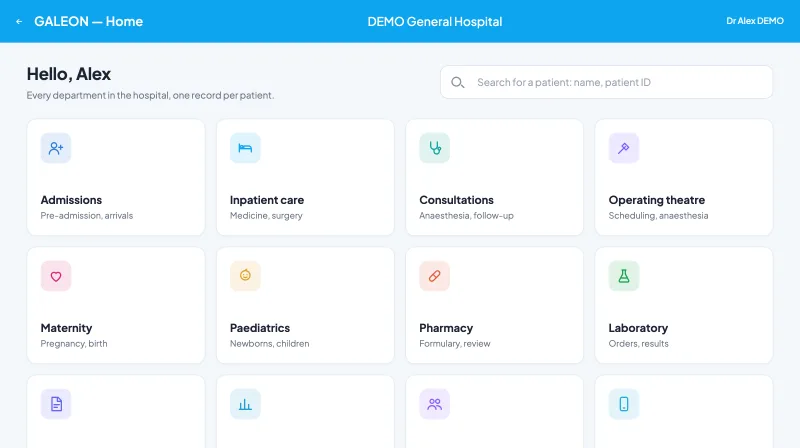
 See Galeon for real

Dual-Eligible Adults with IDD Enrollments in Integrated D-SNPs Rise 2026
Explore the 2021-23 surge in dual-eligible adults with intellectual and developmental disabilities enrolling in integrated D-SNPs and its impact on French hospitals.
The essentials in 30 seconds
| Question | Short answer | What to remember | |
|---|---|---|---|
| What is the enrollment trend? | Enrollments grew 18% from 2021 to 2023. | Rapid growth signals policy impact. | |
| How many beneficiaries are affected? | Approximately 84,000 dual-eligible adults with IDD. | A sizable, vulnerable cohort. | |
| What is an integrated D-SNP? | A Medicare Advantage plan that blends medical and long-term services. | Combines care coordination and payments. | |
| Does the US model map to France? | Only partially; funding and payment differ. | Adaptation required for French reimbursement. | |
| What data gaps remain? | Limited clinical outcome tracking. | Outcome data needed for evaluation. | |
| Can AI help? | AI can structure enrollment data for analysis. | Quality data is prerequisite for medical AI. | |
| What regulatory barrier exists? | EU AI Act classifies some tools as high-risk. | Compliance adds complexity. |
Introduction
Dual-eligible adults with intellectual and developmental disabilities (IDD) face fragmented care in many systems. The United States recent study shows a noticeable rise in enrollment in integrated Dual-Eligible Special Needs Plans (D-SNPs), a model that bundles Medicare and Medicaid services.
Galeon’s smart EHR platform has been deployed in 19 hospitals, handling over three million patient records. Clinicians and data scientists co-created the system since 2016, proving that structured health data can fuel AI-driven insights.
According to Health Affairs (2026), enrollment grew from 71,200 in 2021 to 84,000 in 2023: an 18 % increase. The findings matter for French hospital leaders who must balance cost, quality, and emerging AI regulations.
"Integrated care models can reshape reimbursement pathways when data are trustworthy," writes Dr Claire Moulin, senior health economist at Institut National de la Santé et de la Recherche Médicale (INSERM).
How much did enrollment increase between 2021 and 2023?
Enrollments rose by roughly 18 % over the two-year period.
Numerical detail
The study counted 71,200 beneficiaries in 2021 and 84,000 in 2023. This growth outpaces the overall D-SNP increase, which was about 9 %.
Implication for French hospitals
If French public-private partnerships adopt similar bundled contracts, they could see comparable enrollment spikes among patients with complex needs.
Verification step
Check the latest French health insurance data (CNAM) for trends in dual-eligibility equivalents before applying the US percentages.
What defines an integrated D-SNP and why is it relevant?
An integrated D-SNP blends medical, long-term, and social services into a single capitation payment.
Financial mechanics
The plan receives a global budget from Medicare and Medicaid, encouraging providers to coordinate care and reduce avoidable hospitalizations.
Care coordination example
A patient with Down syndrome receives a coordinated schedule of primary care, therapy, and home health, all tracked in one claim.
French parallel
France’s “projet de santé consolidé” aims at similar cross-sector budgeting, yet the fee-for-service legacy persists.
Can the enrollment data be used to improve AI models in French hospitals?
Yes, provided the data are cleaned, standardized, and linked to outcomes.
Data structuring requirement
Galeon’s blockchain Swarm Learning® lets hospitals train AI locally while keeping data on-premise, matching EU data-sovereignty rules.
Concrete use case
Predictive readmission models for IDD patients could be trained on the enriched enrollment cohort, reducing unnecessary admissions.
Verification checklist
- Confirm HDS certification of the hosting environment.
- Map ICD-10-CM codes to SNOMED CT for consistency.
- Document consent according to the EU AI Act.
What regulatory differences limit direct adoption in France?
Key differences lie in reimbursement, data protection, and AI risk classification.
Reimbursement contrast
The US uses fee-for-service blended with capitation; France relies on the T2A system (tarification à l’activité) for hospital billing.
Data regulation contrast
The US follows HIPAA, whereas French hospitals must comply with HDS certification and the GDPR.
AI Act nuance
Only AI tools directly influencing clinical decisions are labeled high-risk; ancillary analytics remain low-risk.
How does the study address health outcomes for this population?
The study reports limited outcome metrics, focusing mainly on enrollment counts.
Missing clinical data
Metrics such as hospitalization rate, medication adherence, or quality-of-life scores are not provided.
Potential bias
Enrollment may reflect provider outreach effort rather than true health improvement.
Action for French CIOs
Integrate outcome tracking into the DPI to fill this evidence gap.
What does a traditional health-IT approach look like compared with Galeon’s solution?
| Criterion | Traditional EHR | Galeon Smart EHR |
|---|---|---|
| Data structuring | Manual mapping, high error rate | AI-assisted, clinician-validated |
| Interoperability | Limited FHIR support | Full FHIR-R4 and SNOMED CT |
| Privacy compliance | Standard encryption | Blockchain Swarm Learning® keeps data on-site |
| Scalability | On-premise servers, costly upgrades | Sovereign cloud, linear cost growth |
| AI readiness | Data silos, low quality | Structured, ready-to-train datasets |
| Clinical decision support | Rule-based alerts | Predictive models integrated in workflow |
| Maintenance TCO | High legacy licensing | Transparent subscription, lower TCO |
| Patient portal | Basic view only | Personalized health space, GDPR-compliant |
What it changes for the CIO, the medical information department and clinicians
CIO / IT department
Switching to Galeon reduces reliance on legacy vendors and aligns the infrastructure with EU AI Act requirements. The Swarm Learning framework eases cross-hospital collaboration without violating sovereignty.
DIM or hospital management
Structured data enables new reimbursement analyses, helping negotiate bundled contracts similar to D-SNPs while staying within T2A constraints.
Clinicians
Real-time alerts derived from AI models can flag high-risk IDD patients, supporting proactive interventions and potentially lowering readmission rates.
Limits and points of caution
- Outcome data are scarce. The study measures enrollment, not health improvement.
- US payment mechanisms differ. Direct translation to French T2A finance may be misleading.
- Regulatory landscape varies. HIPAA compliance does not guarantee EU GDPR or HDS conformity.
- Swarm Learning is still emerging. Legal opinions differ on cross-border model sharing.
- Sample bias possible. Enrollment may reflect provider incentives rather than patient need.
FAQ
Is the enrollment growth unique to IDD patients?
The study shows a higher growth rate for IDD (18 %) versus the overall dual-eligible population (9 %).
Can French hospitals adopt D-SNP-style contracts?
Bundled payment pilots exist, but national legislation must adapt to allow Medicare-like risk-sharing.
Do we need new hardware for Swarm Learning?
No, the framework runs on existing servers that meet HDS standards.
How soon can AI models be deployed?
Once data are structured and validated, pilot models can be trained in weeks using Galeon’s pre-built pipelines.
What is the cost impact?
Galeon’s subscription model reduces upfront licensing fees; detailed ROI depends on data volume and use case.
In summary
The Health Affairs report confirms a sharp rise in integrated D-SNP enrollment for dual-eligible adults with IDD, highlighting an emerging model that blends financing and care coordination. French hospitals can draw lessons, yet must adapt the approach to T2A, HDS, and the EU AI Act. Structured health data, exactly what Galeon’s AI-ready EHR delivers, are the prerequisite for turning enrollment numbers into measurable outcome improvements. By leveraging blockchain Swarm Learning®, hospitals keep data sovereign while gaining the analytical power needed for predictive care.
Want to know more about our smart EHR ?
Book a demoDiscover how a smart EHR can accelerate AI projects in your hospital
Sources
- Health Affairs, Dual-Eligible Adults with IDD: Enrollment in Integrated D-SNPs Grew, 2021-23
- French Ministry of Health: Health Data Portal
- EU AI Act (Regulation 2021/0859)
- Smart EHR vs Traditional EHR: Galeon
- EU AI Act Healthcare Obligations: Galeon
- HDS Certification Explained: Galeon
They trust us
19 hospitals running Galeon in France.







Join the pioneers of care.

 2 sales reps available from tomorrow
Your IT, your interfaces, your timeline. Pick a slot: Valérie or Yohan will call you back.
- HDS certified
- ISO 27001
- GDPR compliant
- LAP certified (HAS)