Health and AI
Alain Ihler: When a Cyberattack Accelerated an EHR Migration
After a cyberattack, Hôpital Pierre Rouquès accelerated its migration to Galeon’s EHR. CIO Alain Ihler shares the story behind the transition.
An Electronic Health Record migration usually takes months of preparation.
Data needs to be migrated, the new system configured and tested, teams trained, and the final transition from one system to another carefully planned.
At Hôpital Pierre Rouquès in Paris, that process was already underway when everything suddenly accelerated.
/images/blog/alain-ihler-when-a-cyberattack-accelerated-an-ehr-migration/Ihler.webpIn 2022, the hospital suffered a cyberattack.
The transition to Galeon’s EHR was already planned. But it would now have to happen much sooner than expected.
For the first episode of our Regards de soignants series, we met with Alain Ihler, Chief Information Officer at Association Ambroise Croizat, which operates the hospital among other healthcare facilities.
He shared the story of that transition — and offered a glimpse into a role that has become essential to the day-to-day operation of a hospital.
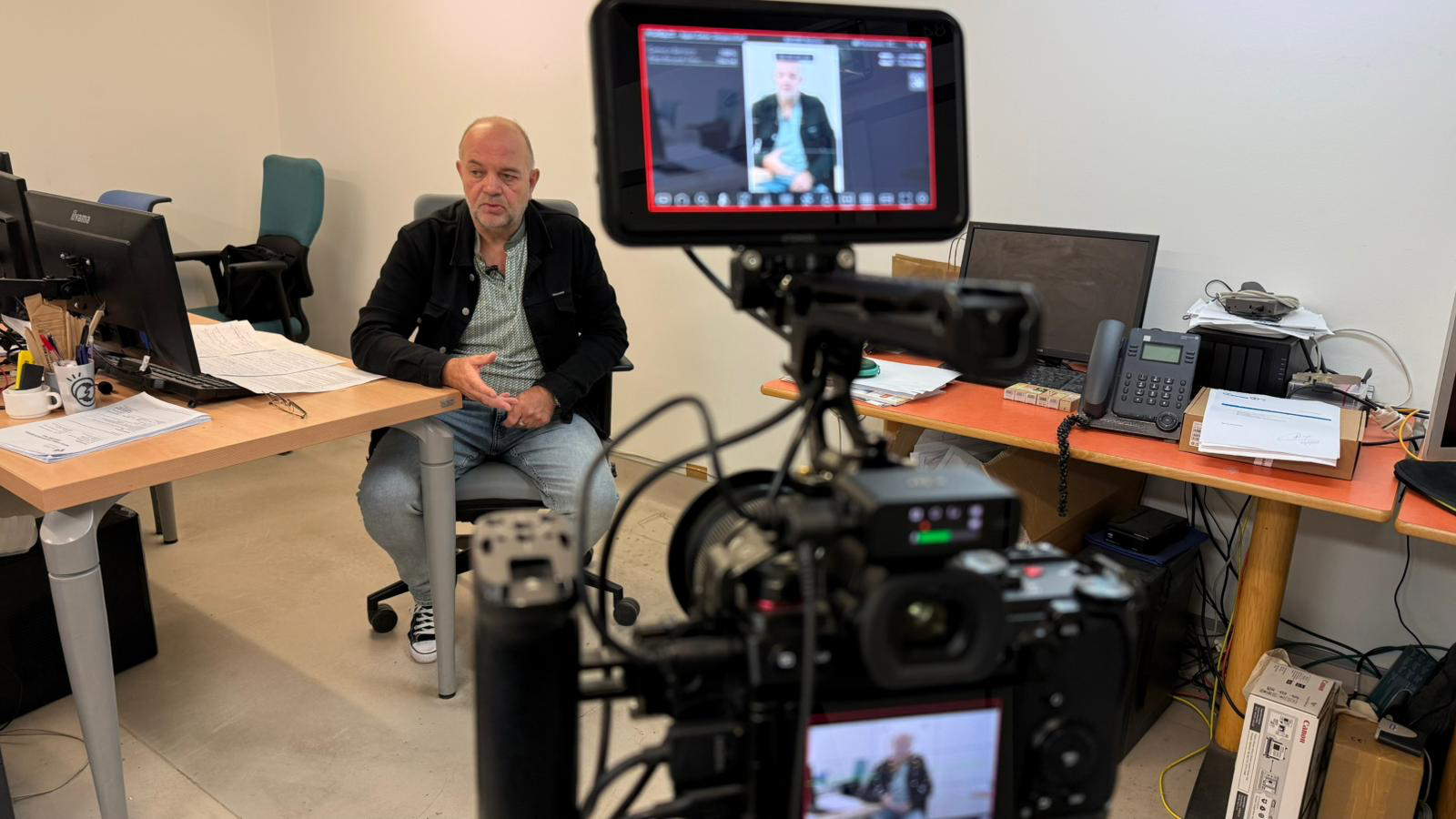
Alain Ihler has been a CIO since 2017.
His day-to-day work goes far beyond keeping computers and networks running. His role sits at the intersection of infrastructure operations, project management, and the needs of healthcare professionals who rely on digital tools every day.
In a hospital, that infrastructure has to work around the clock.
A patient’s record needs to be accessible whenever a healthcare professional needs it. Applications need to communicate with one another. Access must be secure. Health data must be hosted under appropriate conditions.
And when a new tool is introduced, it has to fit into this environment without disrupting the hospital’s operations.
This is particularly true when it comes to the EHR.
Before 2022, teams at Les Bluets maternity hospital were already using some Galeon modules.
The transition to Galeon’s EHR was planned, and some of the work required for the migration had already begun.
Then came the cyberattack.
“We suffered a cyberattack that pushed us to switch to Galeon’s EHR much more abruptly. It went well because we had already done some preparation beforehand, with the support of the Galeon teams, who really helped us make the migration a success,” says Alain Ihler.
The situation also highlights the value of the work done before a crisis occurs.
The migration had to be accelerated, but it did not start from scratch. Part of the preparation had already been completed, and the teams were familiar with Galeon.
In a healthcare facility, where digital tools directly contribute to continuity of care, that preparation takes on particular importance.
Installing a new EHR is not enough.
Doctors, midwives, nurses and other healthcare professionals will use it every day to access and enter the information needed to care for patients.
Their adoption of the system therefore becomes part of the project itself.
At Les Bluets, the transition benefited from a particular context: Galeon was already being used in the hospital through other modules.
Alain Ihler describes healthcare teams as having “fully embraced the Galeon system.”
That previous experience made the transition easier when the timeline suddenly became much tighter.
It also highlights something very concrete about digital transformation in hospitals: a tool may meet specifications and satisfy every technical requirement expected of it. But ultimately, it will be used dozens or hundreds of times every day by professionals who need to be able to work with it.
In his interview, Alain also discusses the relationship with the teams developing the tools.
He had previously worked with an EHR provided by a much larger software company.
With Galeon, he describes a different kind of relationship:
“With Galeon, we had much closer contact. The company was smaller, and they listened to the issues we were facing.”
That proximity takes on another dimension when a healthcare facility faces an unusual situation.
Some issues cannot wait for the next product cycle or pass through several layers of support. They arise directly in the field, while teams still need to keep working.
The role of a hospital CIO also involves knowing where the data entrusted to different digital tools is going.
On this point, Alain explains that he favours providers whose data is hosted in France or Europe. He notably connects this choice to the social mission of Association Ambroise Croizat.
Cybersecurity, hosting, availability and interoperability may seem far removed from a medical consultation or a hospital room.
Yet they underpin part of the hospital’s day-to-day operations.
Les Bluets maternity hospital was one of the first healthcare facilities to use Galeon.
That close relationship with healthcare professionals also contributed to the product’s evolution. Alain even goes so far as to say that Galeon was developed “aux petits oignons pour les soignants” — in other words, carefully tailored to the needs of healthcare professionals.
A few years after the accelerated migration of 2022, his view of the decision made at the time is clear:
“It’s a system that has unanimous support among the healthcare teams. […] Galeon is a great tool for Les Bluets maternity hospital.”
Ultimately, the experience at Les Bluets tells a story about more than just a software migration.
It shows what digital transformation looks like from inside a healthcare facility: infrastructure that needs to be maintained, data that needs to be protected, tools that need to evolve — and, above all, professionals who need to be able to keep working, even when the scenario planned months earlier no longer applies.
🎥 Watch the full interview with Alain Ihler in the first episode of Regards de soignants.