 See Galeon for real

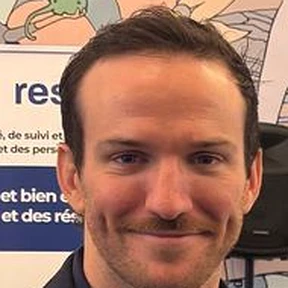
Anne-Sophie Lafitte: When Digital Technology Gives Healthcare Professionals More Time
Healthcare Perspectives: Episode 2
In a maternity unit, no two days are ever quite the same.
A scheduled consultation may be interrupted by an emergency. A decision sometimes needs to be made quickly. Medical information recorded several months earlier can suddenly become essential within seconds.
For Dr Anne-Sophie Lafitte, an obstetrician-gynaecologist at a university hospital, this reality makes one thing essential: access to clear, reliable and readily available medical information.
But behind this necessity lies another, more everyday challenge: the role digital tools play in healthcare professionals’ work.
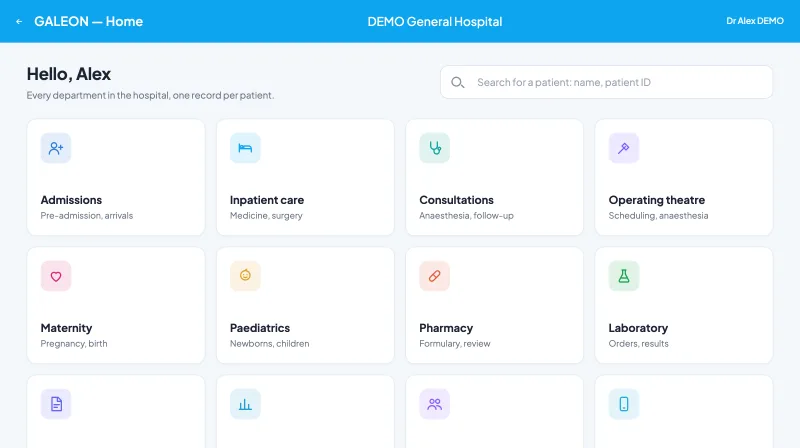
In this second episode of Healthcare Perspectives, she shares her experience of Galeon’s electronic health record (EHR), her views on artificial intelligence and a conviction that runs throughout the interview: technology should enable doctors to spend more time with their patients.
Obstetrics: Between Patient Care and Emergencies
What first attracted Anne-Sophie Lafitte to obstetrics and gynaecology was the diversity of the speciality.
It combines medicine, surgery and supporting women through different stages of their lives. Pregnancy holds a particular place: it is a physiological process during which healthcare professionals can support women who are otherwise in good health.
But obstetrics also involves emergencies.
In delivery rooms and gynaecological emergency departments, certain situations require rapid decisions based on a wide range of clinical information.
Alongside this work are consultations, ultrasound examinations, the training of junior doctors and the academic responsibilities associated with a university hospital.
Anne-Sophie Lafitte also coordinates a multidisciplinary prenatal diagnosis centre.
This role involves organising care pathways, bringing different medical specialities together and, when necessary, anticipating the care babies may need after birth.
In a working environment where situations change constantly and multiple teams are involved, the flow of medical information is essential.
The Growing Role of Electronic Health Records in Everyday Practice
Since the beginning of her medical residency, Anne-Sophie Lafitte has seen digital technology take on an increasingly important role in medical practice.
Her department now operates without paper archives. The electronic health record has become an essential everyday tool.
Consultations, procedures, communications with community healthcare professionals and discussions with patients must all be documented.
This last aspect is particularly important.
Patients want to understand the decisions being proposed and take part in their own care. These conversations are part of the care process and must be recorded in the medical record.
Such documentation is essential. But it also represents a considerable workload.
For Anne-Sophie Lafitte, the issue is not necessarily the time spent in front of a computer. What matters is what the tool actually enables healthcare professionals to accomplish.
Poorly adapted software can turn a necessary task into a source of daily frustration. Conversely, an intuitive tool can make documentation easier and that time more productive.
She sums up this expectation with a simple idea:
“The best tool is one you can forget you’re using.”
In other words, software intuitive enough to allow doctors to quickly find and record the information they need without constantly diverting their attention away from the consultation.
Finding Information Without Starting from Scratch
An electronic health record does more than store documents.
It also preserves the history of a patient’s care journey.
In obstetrics, this continuity is particularly important. When a patient returns for another pregnancy, information from previous consultations and pregnancies can be invaluable.
But that information needs to be structured and reusable.
Anne-Sophie Lafitte highlights the benefits of having an existing set of medical information that can simply be updated and supplemented.
However, she also points out a challenge: information may be present in a patient’s record without being immediately easy to find.
When several healthcare professionals use the same software, their documentation habits may differ. As a result, certain details can end up being recorded in different places.
The solution is therefore not purely technical.
It also depends on teamwork, shared practices and user training.
An effective electronic health record depends as much on how information is organised as on how healthcare professionals use it.
Software That Evolves Alongside Healthcare Teams
Before Galeon, the department was already using an electronic health record system.
However, Anne-Sophie Lafitte explains that the previous software had changed very little between its initial implementation and its replacement.
This is one of the differences she highlights in her experience with Galeon: the ability to improve the software based on the needs expressed by healthcare professionals.
Her first impression, shared by the wider team, was particularly positive regarding its usability.
She mentions junior doctors who discover the software when joining the department and are able to use it without significant difficulty, even without extensive initial training.
Beyond ease of use, however, what matters most to her is the relationship with the development teams.
She does not believe that perfect medical software already exists. Every solution has its strengths and limitations.
The challenge is therefore to continuously improve it alongside the professionals who use it every day.
Feedback from healthcare professionals becomes a valuable resource for product development.
This collaborative approach does not eliminate technical constraints or development timelines. Anne-Sophie Lafitte is well aware of that.
But she appreciates being able to report difficulties, suggest improvements and see that these requests are taken into consideration.
For her, listening to users is not simply an optional part of developing medical software: it is essential to ensuring that the technology remains relevant.
Artificial Intelligence: Supporting Doctors, Not Making Decisions for Them
The interview also explores the growing role of artificial intelligence in medical practice.
Anne-Sophie Lafitte recognises its potential while expressing reservations about the role it could play in clinical decision-making.
In obstetrics, two seemingly similar medical situations may require different approaches to care.
A mother’s personal circumstances, medical history, concerns and experiences must also be taken into account.
These factors cannot always be reduced to data that a computer system can easily interpret.
Nevertheless, AI can offer benefits in certain specific tasks.
Anne-Sophie Lafitte gives the example of prenatal screening ultrasound examinations.
These examinations must meet precise requirements, both in terms of the images captured and the information included in medical reports.
AI tools can be developed to help verify that an examination is complete and that all the expected information has been collected.
In this context, technology supports medical practice rather than replacing the healthcare professional.
The distinction becomes even more important when difficult decisions need to be communicated.
Explaining the need for an emergency caesarean section, delivering bad news, listening to a patient’s concerns or supporting someone through a difficult moment all require human presence.
For Anne-Sophie Lafitte, artificial intelligence cannot reproduce this dimension of the care relationship with the same level of quality.
Learning to Question, Even in the Age of AI
The development of artificial intelligence also raises questions about the training of future doctors.
Junior doctors now have access to tools capable of quickly summarising large amounts of scientific information.
This is a valuable opportunity, but it also carries a risk: assuming that a well-written answer is necessarily reliable.
Anne-Sophie Lafitte emphasises the importance of continuing to teach critical evaluation of information.
The ability to verify sources, question results and recognise a tool’s limitations remains fundamental.
She sums up this challenge with a particularly powerful statement:
“A culture of questioning must remain central to our profession.”
AI can make knowledge more accessible. It does not remove the need to learn how to evaluate it.
Protecting Health Data While Improving Information Sharing
Digital transformation in hospitals goes beyond the way software operates.
It also concerns the protection and exchange of medical data.
Anne-Sophie Lafitte highlights the sensitivity of this information, both for healthcare professionals and patients.
She believes it is important to be able to explain to patients where their data is hosted, under what conditions it is stored and how it is used.
However, protecting data should not prevent healthcare organisations from improving how information is shared throughout the patient care journey.
The obstetrician-gynaecologist describes the difficulties that arise when information cannot be easily transferred between community healthcare providers and hospitals, or between different healthcare institutions.
When a patient arrives at a new department, medical teams sometimes have to repeat part of the information-gathering process.
That is time that could be devoted to other medical tasks.
Interoperability therefore represents a very practical challenge: enabling authorised healthcare professionals to access relevant information while preserving patient confidentiality.
Changing Medical Software: An Investment Beyond Technology
Anne-Sophie Lafitte understands why hospital management teams may hesitate before replacing an electronic health record system.
Such a project involves financial costs, but also a significant human and organisational investment.
The transition requires considerable effort from healthcare teams and can be difficult to manage.
However, keeping unsuitable software can also have consequences for professionals’ everyday work: repeated frustrations, usability difficulties and a feeling of wasted time.
Supporting teams through change is therefore essential.
Better-adapted software, combined with a carefully planned implementation, can help improve working conditions.
For Anne-Sophie Lafitte, staff satisfaction is far from a secondary concern.
It contributes to workforce stability, which is itself important for the quality and continuity of patient care.
What Healthcare Professionals Need Most: Time
Throughout the interview, one concern comes up repeatedly.
Doctors must document procedures, retrieve information, coordinate care and carry out numerous administrative tasks.
But the heart of their profession remains caring for patients.
Anne-Sophie Lafitte hopes that digital tools can free up more time for consultations, clinical reflection, conversations with patients and teamwork.
She also stresses that medical training must remain deeply human.
Young doctors need to learn how to use digital tools, but also how to ask for help, observe their colleagues and draw on the experience of healthcare teams.
Because behind medical records, protocols and technologies, there are always people.
Professionals who must make decisions. Patients who need to understand. Situations in which the quality of human support matters just as much as access to information.
Ultimately, Anne-Sophie Lafitte’s experience tells us much more than the story of adopting new software.
It shows what digital technology can offer when it is designed around healthcare professionals’ real needs: better-organised information, tools that can evolve and, potentially, more time available for patients.
The goal is not to spend more and more time in front of a screen. It is to enable healthcare professionals to devote more time to what makes their work meaningful: caring for people.
🎥 Watch the full interview with Dr Anne-Sophie Lafitte in the second episode of Healthcare Perspectives.
Related reading
They trust us
19 hospitals running Galeon in France.











Join the pioneers of care.
 2 sales reps available from tomorrow
Your IT, your interfaces, your timeline. Pick a slot: Valérie or Yohan will call you back.
- HDS certified
- ISO 27001
- GDPR compliant
- LAP certified (HAS)