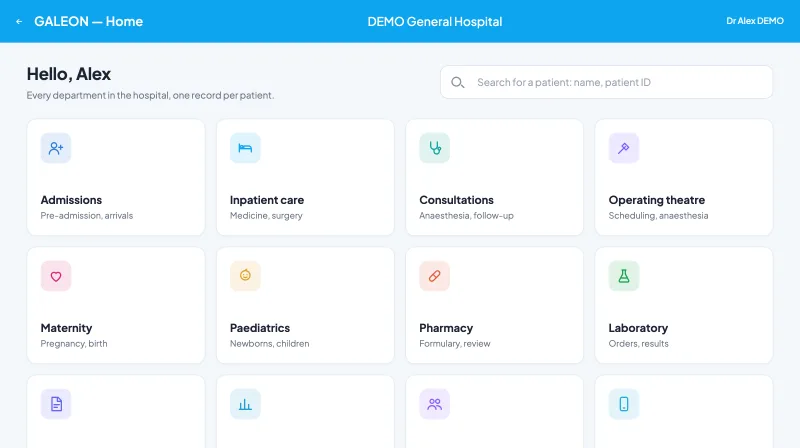
 See Galeon for real

AI Tools to Reduce Clinician Alert Fatigue: What the Evidence Shows in 2026
Which AI tools reduce clinician alert fatigue? The published figures on alert overload, the tools evaluated so far (TREWS, MedAware, Seegnal) and their limits.
Key takeaways in 30 seconds
| Question | Short answer | Key takeaway |
|---|---|---|
| What is alert fatigue? | Clinicians desensitised by too many alerts. | When most alerts call for no action, the one that matters is overridden like the others. |
| How many alerts does a clinician receive? | 56 a day in one primary care study. | About 49 minutes a day spent processing them, at a US Veterans Affairs facility (Murphy et al., 2012). |
| How often are alerts overridden? | 49% to 96% of drug safety alerts. | Range from a review of computerized order entry studies (van der Sijs et al., 2006). |
| Do most alarms need action? | No. | The Joint Commission estimates that 85% to 99% of alarm signals do not require clinical intervention. |
| Can AI reduce alert volume? | Yes, in published evaluations. | A context-aware medication tool fired 1,697 inpatient alerts where the EHR rules fired 27,540 (retrospective, Brigham and Women's). |
| Can AI alerts make things worse? | Yes, when they are not validated. | An external validation of the Epic Sepsis Model found alerts on 18% of hospitalized patients and 67% of sepsis cases missed. |
| What matters most? | Precision, not only volume. | An alert that is usually right gets read again: 85% of one machine-learning tool's inpatient alerts were clinically valid. |
| What does Galeon do? | LAP-certified prescribing checks. | Interactions, contraindications and doses are checked as the order is written, against official clinical references. |
Introduction
Clinical alerts were designed to make care safer. In many hospitals, they have become one of the main sources of information overload: a pop-up on almost every order, alarms in every room, reminders that repeat what the clinician already knows. When most alerts call for no action, clinicians learn to dismiss them, and the alert that flags a real danger is dismissed with the same gesture. This is alert fatigue.
This article looks at what the research measures, which AI tools to reduce clinician alert fatigue have been evaluated, what that evidence is worth, and what a hospital should check before deploying one. It expands a section of our article on AI and cognitive load in hospitals.
An AI alert tool is useful when it makes each alert more likely to be right, not only when it makes alerts fewer.
What is clinician alert fatigue, and how big is the problem?
Alert fatigue is the desensitisation that sets in when clinicians receive more alerts than they can meaningfully process. It concerns two families of signals: alerts raised by the EHR and its decision support (drug interactions, duplicate orders, reminders), and alarms raised by monitoring devices at the bedside.
In a study of 47 primary care practitioners at a US Veterans Affairs facility, clinicians received a mean of 56.4 EHR alerts per day containing new information, and spent an estimated 49 minutes a day processing them (Murphy et al., American Journal of Medicine, 2012). At the bedside, a 2014 study of physiologic monitors across 66 adult intensive care beds recorded more than 2 million alerts in one month, or 187 warnings per patient per day, as summarised in the AHRQ patient safety primer on alert fatigue.
Most of these signals need no action. The Joint Commission estimates that between 85% and 99% of alarm signals do not require clinical intervention (Sentinel Event Alert 50, 2013).
Why is alert fatigue dangerous?
Because clinicians adapt to the noise. Drug safety alerts are overridden in 49% to 96% of cases, according to a review of computerized order entry studies (van der Sijs et al., JAMIA, 2006). For some alert types the rate is higher still: 98% of duplicate-medication alerts were overridden in a study by Nanji et al., cited by Shah et al. (Drug Safety, 2021). A clinician who has learned that almost every alert is irrelevant processes the next one the same way, even when it flags a dangerous interaction.
The Joint Commission received 98 reports of alarm-related events between January 2009 and June 2012, 80 of which resulted in death. It stresses that these reports are not epidemiological data, but they show what is at stake when a signal is missed.
Cutting the number of alerts is not enough on its own. Reviewing the experience of four US health systems, McGreevey et al. describe a 45% reduction in interruptive alerts at Penn Medicine, and also observe that such efforts only minimally changed the override rate for medication alerts (Applied Clinical Informatics, 2020).
Which AI tools reduce clinician alert fatigue?
The AI tools to reduce clinician alert fatigue that have published evaluations fall into four groups: context-aware medication alerts (Seegnal), machine-learning detection of unusual prescriptions (MedAware), targeted early warning systems (Bayesian Health's TREWS) and alarm-setting tools for bedside monitors (Philips IntelliVue Alarm Advisor). Certified rule-based checks inside the EHR and clinician-led alert reviews remain the baseline they are measured against.
| Type of tool | Named examples | What it does | Evidence available |
|---|---|---|---|
| Context-aware medication alerts |  | Checks patient data such as renal function and lab results before firing a medication alert. | Retrospective comparison at Brigham and Women's Hospital (Drug Safety, 2021): 1,697 inpatient alerts against 27,540 for the EHR rules, about 94% fewer. The study compared alerts on past records, not patient outcomes. |
| Machine-learning detection of unusual prescriptions |  | Flags prescriptions that are statistical outliers for the patient. | Inpatient study at Sheba Medical Center (JAMIA, 2019): alerts on 0.4% of medication orders, 85% confirmed clinically valid, 43% led to changes in subsequent medical orders. Outpatient study: 79.7% clinically valid, 68.2% of alerts would not have been raised by the existing rules. |
| Targeted early warning |  TREWS, sepsis | Machine-learning sepsis early warning built into the EHR. | Two companion studies (Nature Medicine, 2022): 89% of alerts were evaluated by a physician or advanced practice provider; when an alert was confirmed within 3 hours, mortality was 18.7% lower in relative terms. Observational design; one of the authors is affiliated with the company. |
| Machine-learning alert filtering (research) | University of Utah Health model | Predicts which medication alerts clinicians will act on and suppresses the others. | Simulation on 3.48 million alerts (JAMIA, 2022): alert volume could fall by 54.1% while keeping a sensitivity of 0.99. Not a deployed result. |
| Monitor alarm settings |  IntelliVue Alarm Advisor | Suggests customised alarm limits for bedside monitors. | Study in a 56-bed medical ICU at Yale New Haven Hospital, sponsored by Philips (PLoS One, 2018): medium-priority heart rate, respiratory rate and arterial pressure alarms fell by 9.3%, 11.8% and 15.9%. |
| Certified prescribing checks built into the EHR |  | Checks drug interactions, contraindications and doses as the order is written, in the patient record. | LAP certification by the HAS, France's National Authority for Health, which requires interaction alerts verified against official clinical references and regular database updates. No published alert-volume figure. |
| Clinician-led alert review (no AI) | Vanderbilt University Medical Center (Clickbusters), Penn Medicine | Clinicians review the alert catalogue and retire or rewrite low-value alerts. | Vanderbilt: 71,227 fewer interruptive alerts per week, a 15% reduction (JAMIA, 2022). Penn Medicine: 45% fewer interruptive alerts (Applied Clinical Informatics, 2020). |
Read these results with their design in mind. Most are retrospective or observational; the TREWS mortality figure comes from a prospective cohort, not a randomized trial; the Utah figure is a simulation; and the Philips study was sponsored by the manufacturer. None of them yet shows, in a randomized trial, that an AI alert filter reduces harm.
When do AI alerts make alert fatigue worse?
When the model is not accurate enough for the population it runs on. An external validation of the Epic Sepsis Model at Michigan Medicine found, in a retrospective study of 38,455 hospitalizations, an area under the curve of 0.63: the model generated alerts for 18% of all hospitalized patients, yet did not identify 67% of the patients who had sepsis (Wong et al., JAMA Internal Medicine, 2021). A model that alerts often and misses most cases adds to alert fatigue rather than relieving it.
Context-aware filtering also depends on data. A tool that suppresses a dose alert because renal function is normal needs a recent, structured renal function value in the record. Where results sit in scanned documents or free text, the filter has nothing to work with.
How should a hospital evaluate an AI tool for alert fatigue?
- Measure the baseline. Alerts per clinician per day, and override rates by alert type, before anything changes.
- Ask for precision and missed cases, not only volume. The share of alerts that are clinically valid, and the events the tool did not flag.
- Require external validation. On a population and a care setting close to yours: the Epic Sepsis Model example shows what a model can lose outside its development site.
- Check the data the tool needs. Lab results, renal function, current treatments: in structured fields, up to date.
- Keep clinicians in charge of the alert catalogue. Vanderbilt's Clickbusters programme removed 71,227 interruptive alerts a week without any AI.
- Measure again after go-live. On the same indicators, at the same interval.
What does Galeon do about alert fatigue?
In the Galeon EHR, alerts at the point of prescribing come from LAP-certified prescribing support: drug interactions, contraindications and doses are checked as the order is written, by a module certified against the framework of the HAS, France's National Authority for Health. The certification requires drug interaction alerts verified against official clinical references and regular updates to the clinical databases. The tool supports, and the prescriber decides.
Two design choices of the record work upstream of the alerts. Each piece of information is entered once and carried over where it is needed, which avoids the contradictory values a duplicated entry creates: one hospital described finding several weights for the same patient in its former EHR (SantExpo 2025). And the data is structured, which is the prerequisite for any filtering that takes the patient's context into account. See what Galeon's AI changes in a hospital, including LAP-certified prescribing support, and the Galeon EHR's certifications, from HDS to LAP.
FAQ
What is clinician alert fatigue?
The desensitisation that sets in when clinicians receive more alerts than they can meaningfully process. When most alerts call for no action, clinicians learn to override them, including the rare one that flags a real danger.
Which AI tools reduce clinician alert fatigue?
Context-aware medication alerts (Seegnal), machine-learning detection of unusual prescriptions (MedAware), targeted early warning systems (Bayesian Health's TREWS) and alarm-setting tools for bedside monitors (Philips IntelliVue Alarm Advisor) have published evaluations. Most are retrospective or observational.
Does reducing the number of alerts improve patient safety?
Not automatically. Fewer alerts help only if the ones that remain are right. In the health systems reviewed by McGreevey et al., cutting alert volume only minimally changed the override rate for medication alerts.
Can AI alerts be wrong?
Yes. An external validation of the Epic Sepsis Model at Michigan Medicine found an area under the curve of 0.63: it alerted on 18% of hospitalized patients and missed 67% of patients with sepsis. Any AI alert should be validated on a population like yours.
What is the difference between alert fatigue and alarm fatigue?
Alert fatigue usually refers to alerts raised by the EHR and decision support software, such as drug interaction warnings. Alarm fatigue refers to the audible alarms of bedside monitors and devices. The mechanism is the same: too many signals that need no action.
How does Galeon handle prescribing alerts?
Galeon's prescribing support is LAP-certified by the HAS: drug interactions, contraindications and doses are checked as the order is written, against official clinical references. The tool supports, and the prescriber decides.
In summary
Alert fatigue is information overload produced by clinical software itself: dozens of EHR alerts a day, alarm signals that mostly need no action, and override rates of 49% to 96% for drug safety alerts. AI tools to reduce clinician alert fatigue exist and have been evaluated, from context-aware medication alerts to targeted sepsis warnings, with encouraging but mostly retrospective or observational results. The Epic Sepsis Model shows the opposite risk: an unvalidated model adds noise. What separates the two is precision, external validation and structured data. That is the ground Galeon works on, with LAP-certified prescribing checks inside a record where each piece of information is entered once.
Want to see how prescribing checks work in the Galeon EHR?
Book a demoSources
- Murphy et al. Notifications received by primary care practitioners in electronic health records. American Journal of Medicine, 2012
- AHRQ Patient Safety Network: Alert fatigue (primer)
- The Joint Commission: Sentinel Event Alert 50, medical device alarm safety in hospitals (2013)
- van der Sijs et al. Overriding of drug safety alerts in computerized physician order entry. JAMIA, 2006
- McGreevey et al. Reducing alert burden in electronic health records: recommendations from four health systems. Applied Clinical Informatics, 2020
- Shah et al. Seegnal medication alerts compared with EHR alerts at Brigham and Women's Hospital. Drug Safety, 2021
- Segal et al. Machine-learning medication error alerts (MedAware) in an inpatient setting. JAMIA, 2019
- Rozenblum et al. Using a machine learning system to identify and prevent medication prescribing errors (MedAware, outpatient). Joint Commission Journal on Quality and Patient Safety
- Bayesian Health TREWS, first of two companion studies (Adams et al.; Henry et al.). Nature Medicine, 2022
- Bayesian Health TREWS, second of two companion studies. Nature Medicine, 2022
- Liu et al. Machine-learning model to reduce medication alert volume, University of Utah Health. JAMIA, 2022
- Ruppel et al. Alarm Advisor in a medical intensive care unit (Philips). PLoS One, 2018
- Wong et al. External validation of a widely implemented proprietary sepsis prediction model in hospitalized patients. JAMA Internal Medicine, 2021
- Vanderbilt University Medical Center: the Clickbusters programme reduces EHR alerts (2022)
- SantExpo 2025: big bang EHR deployment (structured data)
- Galeon: what Galeon's AI changes in a hospital
- Galeon: security and certifications, HDS, ISO 27001, LAP
Related reading
They trust us
19 hospitals running Galeon in France.











Join the pioneers of care.

 2 sales reps available from tomorrow
Your IT, your interfaces, your timeline. Pick a slot: Valérie or Yohan will call you back.
- HDS certified
- ISO 27001
- GDPR compliant
- LAP certified (HAS)